

Frizz Control Guide: Why Hair Frizzes and What Actually Helps
Table of Contents
You know the scene. Forty minutes in front of the mirror, hair finally looking the way you pictured it, and then you walk out the door and the air just… gets to it. Ten minutes later you’ve got a fuzzy halo and a mood to match. Or the reverse, you roll out of bed and there are flyaways sticking up in directions hair shouldn’t even be able to go.
Frizz doesn’t discriminate much. Straight, wavy, curly, coily, everyone gets a turn. It just shows up wearing different outfits depending on your texture.
What bugs me is how it’s usually talked about, like there’s one cause and one bottle that fixes it. There isn’t. Frizz is a symptom of something, and the something changes from head to head. So let’s work out what’s really going on up there.
One quick thing first, since it explains so much of what follows: how your hair handles water. The Hair Porosity Test takes a couple of minutes, and a lot of people are surprised by what it tells them.
What Frizz Actually Is
Each strand is wrapped in an outer layer called the cuticle, a bunch of tiny scales stacked over each other like shingles on a roof. When they lie flat, your hair looks smooth and shiny and feels soft. When they lift, you get rough, dull, puffed up hair. That’s frizz, plain and simple.
So why do they lift? Mostly water, or the lack of it. Hair is always trying to match the moisture in the air around it. If yours is dry, it’ll pull in whatever humidity it can find, swell unevenly, and pop those scales up. Muggy day, frizz. Winter with the heater blasting, also frizz, only this time from the opposite direction.

Why Your Hair Frizzes More Than Someone Else’s
Texture matters first. Curly and coily hair frizz the easiest, because scalp oil has a long, twisty road to travel down those strands and often never makes it to the ends. Dry ends grab moisture from the air like sponges. Wavy hair gets caught in the middle, frizzing whenever its waves lose their shape. Straight hair frizzes too, but you’ll notice it more as flyaways and static, or fuzzy, rough ends, rather than a big puff.
Then there’s porosity, which people skip over and shouldn’t. If your cuticle is naturally raised or has been roughed up by damage, your hair takes in humidity fast and frizzes almost on the spot. If it’s the low porosity kind, the cuticle sits tight, so products tend to perch on the surface and hair can still end up looking fuzzy. Same curl pattern, totally different problem.
And damage, of course. Heat tools, bleach, color, years of yanking a brush through knots.A cuticle that’s been through all that struggles to lie flat, and serum only smooths it temporarily.If dryness and breakage sound familiar, the Dry & Damaged Hair Guide picks up where this leaves off.
Little Things That Add Up to a Lot of Frizz
Most of it is stuff we do on autopilot.
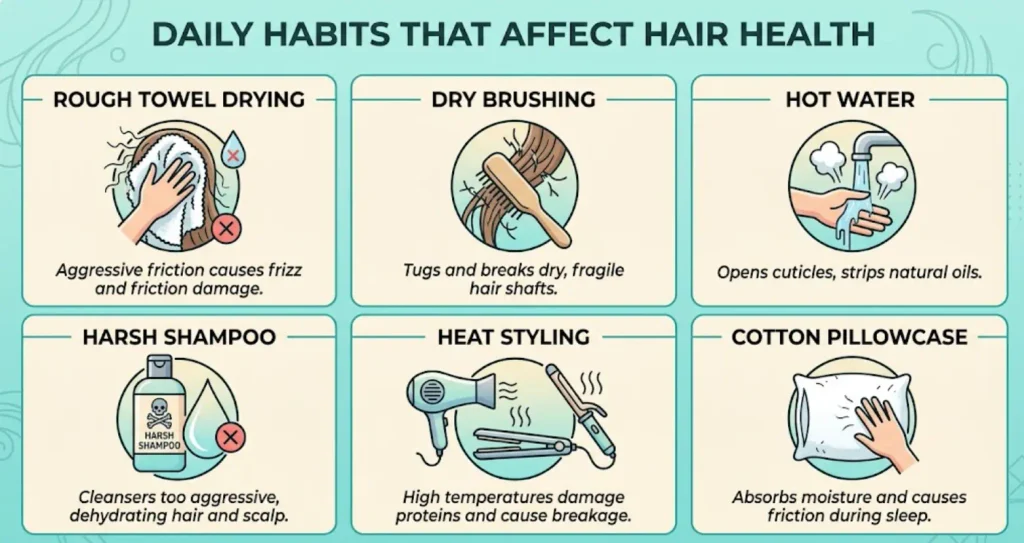
The bath towel, for one. Rubbing wet hair with a regular towel scuffs the cuticle, and damp hair goes fuzzy almost right away. Brushing it dry does the same, and it’s especially rough on curls and waves, because you’re breaking apart clumps that were holding the pattern together.
Scalding hot showers can dry hair out. So can harsh shampoos, including some sulfate-based ones, which can leave hair feeling squeaky and stripped, especially if it’s already dry or curly. Running your fingers through it all day long doesn’t help either, since every touch disturbs the surface a little. Heat styling with no protection is a big one. And skipping conditioner because hair “feels heavy” is a classic mistake, because frizzy hair is almost always thirsty hair, and taking moisture away only makes it worse.
Oh, and pillowcases. Cotton can create friction overnight, which may be why some people wake up frizzier than when they went to sleep
So What Helps?
No miracle product, sorry. It’s more like a handful of small changes that pile up in your favor.
Moisture first. A decent conditioner every wash, and a deeper mask about once a week, beats most styling products on the shelf. Put it on from mid lengths down, and skip the roots if they get greasy.
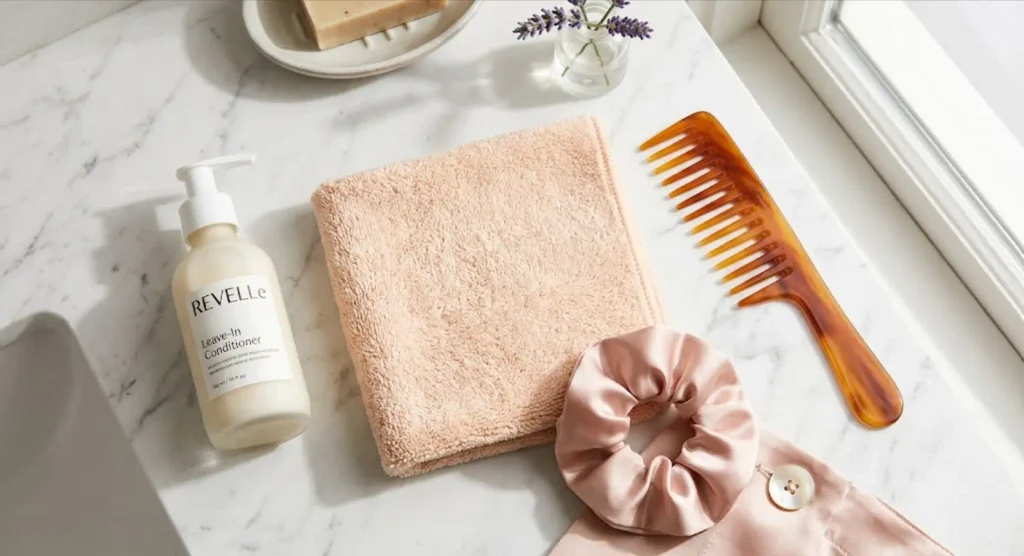
Then the way you dry. Swap the bath towel for a microfiber one, or just grab an old cotton t-shirt, and press the water out instead of rubbing. Air dry if you can. If you’re in a rush, a diffuser on low heat is fine.
Next comes a leave in conditioner or light cream on damp hair, which is where most of the anti frizz work happens, because it coats the hair while it dries, which helps smooth the cuticle and cut down on frizz. Thick, curly, or coily hair usually wants something richer. Fine hair, lighter. You’ll figure out your sweet spot with a bit of trial.
Heat protectant every time you style, no exceptions, and if you can drop the temperature a notch, do it. Detangle when hair is wet and full of conditioner, using a wide tooth comb or fingers. After that, hands off. Seriously. Every time you touch dry hair, you’re roughing up a little more of it.
Standing in the shampoo aisle with no idea what suits your hair? The Hair Product Finder can save you some money and a few disappointments.
What Works for Each Hair Type
Straight hair: your frizz is mostly flyaways, static, and fuzzy ends. A lightweight serum through the lengths, a little leave in on the tips, and less brushing usually sort it out. Heat is often the sneaky culprit here, so protect it.
Wavy hair tends to frizz when the waves fall apart, especially in humid air. A light mousse or cream on soaking wet hair, scrunched in and then left completely alone while it dries, tends to work best. More on this in the Wavy Hair Guide.
Curly hair is a definition game, and frizz is basically definition gone wrong. Give curls lots of moisture, a cream or gel on very wet hair, and don’t fiddle with them while they dry. The Curly Hair Guide covers it properly.
Coily and 4C hair mostly frizzes because of dryness. Deep conditioning, layering products to lock moisture in, and being gentle when you handle it will do the most good. Have a look at the Coily Hair Guide for the details.
A Simple Routine to Start With
If a list of tips feels like too much, here’s a basic rhythm that works for most people once you tweak it to your hair.
Wash day: a gentle shampoo on your scalp (sulfate-free if your hair is dry or curly), moisturizing conditioner through the lengths, and a lukewarm or cool rinse rather than very hot water.
Right out of the shower, squeeze the water out with that microfiber towel, then put your leave in and styling product on while hair is still very wet. Let it air dry or diffuse it, and try not to poke at it.
In between washes, a light mist of water with a bit of leave in mixed through refreshes things. Sleep on silk or satin if you can, or tie your hair up loosely in a silk scrunchie.
Would you rather have something built around your own hair than a general outline? The Hair Routine Builder does exactly that.
The Weather Has a Say Too
Humidity is the obvious one. Damp air gives thirsty hair loads of moisture to grab, and it swells. On sticky days, sealing products like creams, gels, and anti humidity sprays put up a barrier so your hair doesn’t soak up quite so much.
Cold, dry weather does its own damage. Heating indoors and low humidity outdoors dry hair out, and you get static, flyaways, and a rough texture. In winter, a richer conditioner, more frequent deep conditioning, and a humidifier at home can make a real difference.
Basically, don’t expect one routine to work all twelve months. Tweak it as the seasons change.
When Frizz Means Something Else
Every so often, frizz is really a sign that damage has been quietly stacking up. Hair that feels rough, snaps easily, and has lost its bounce, along with all the frizz, needs gentler handling, a moisture-focused routine and a trim to remove the worst ends, not just smoothing products. Damaged strands can’t truly repair themselves, so the goal is to stop new damage and look after the hair you have..
To get a clearer sense of where your hair stands, the Hair Health Score Calculator gives a more honest read than squinting at it in the mirror.
Frequently Asked Questions
Why is my hair so frizzy?
Most often it’s dry or damaged, which lifts the cuticle and lets hair take on moisture from the air unevenly. Hair type, porosity, humidity, heat styling, and rough handling all play a part.
How do I get rid of frizz permanently?
You can’t really cure it for good, but you can manage it very well. Steady moisture, gentle drying, heat protection, and the right styling products cut it down a lot. Smoothing treatments last a few months, though they don’t change your natural hair type. Some keratin and smoothing products contain or release formaldehyde when heated, which can irritate your eyes, nose and lungs, so read the label and ask your stylist what’s in the product before booking.
Does humidity really make frizz worse?
Yes. Dry or damaged hair absorbs moisture from humid air unevenly, so strands swell and the cuticle lifts. Sealing products help block some of that.
Should I brush frizzy hair?
Not when it’s dry, especially if it’s curly or wavy, since that breaks up the pattern and creates more frizz. Detangle gently on wet hair with conditioner in.
Does a silk pillowcase actually help with frizz?
It may cut down on friction overnight compared to cotton, which could mean less morning frizz. The evidence is limited, so it works best alongside a decent moisture routine rather than on its own.
Can frizz be a sign of damaged hair?
Often, yes. A rough, lifted cuticle from heat, color, or chemical treatments is one of the most common causes, and it usually calls for gentler handling, a moisture-focused routine and regular trims on top of anti-frizz styling.
What is the best way to dry hair to avoid frizz?
Squeeze or scrunch water out with a microfiber towel or cotton t-shirt instead of rubbing, apply leave in conditioner while hair is damp, then air dry or diffuse on low heat, and leave it alone while it dries.
Final Thoughts
Frizz can feel like you’re doing something wrong, but usually your hair is just asking for something, whether that’s more moisture, gentler treatment, or some protection from heat. Once you know what yours is reacting to, be it humidity, damage, or some habit you didn’t realize was hurting it, everything gets easier to live with.
If damage is what you keep coming back to, the Dry & Damaged Hair Guide goes deeper on repair, and for a routine that fits your hair specifically, the Hair Routine Builder is a good next step.
Sources
This article is for general education and isn’t medical advice. It draws on the following sources:
