

Wavy Hair Guide: Everything You Need to Know About Your Hair Type
Table of Contents
Nobody really talks about wavy hair the way they talk about straight or curly. Probably because it never fully commits to being either. Some mornings it does that soft, undone-looking wave and you feel like you’ve finally figured your hair out. Next day, same shower, same products, and it just sits there flat — like it forgot what it’s supposed to do.
If you’ve ever grabbed a piece of your hair and wondered “is that a curl, or is it just bending funny,” that’s wavy hair. So let’s get into what’s actually going on with it — what works, what doesn’t, and where most people quietly mess up their routine without realizing it.
One thing first — if you’re still not 100% sure this is your texture, our Hair Type Quiz takes about a minute and settles it.
What Wavy Hair Actually Is
In the popular Andre Walker typing system, wavy hair is Type 2. But that label covers way more ground than people assume. At one end, the wave is so faint you’d never notice it unless your hair’s wet. At the other, it’s thick enough that people mistake it for curly all the time.
Most of us picture something in the middle when we say “wavy hair” — S-shaped bends that start around mid-length and get a bit more pronounced toward the ends.

If squinting at your reflection isn’t cutting it, the Hair Texture Test will give you a straighter answer.
The Three Wavy Sub-Types, and Why It Matters Which One You Are
It’s easy to lump all wavy hair into one bucket, but the care routine shifts a fair bit depending on where you land, so it’s worth slowing down on each one.These sub-types are a styling shortcut rather than a medical classification, and plenty of heads are a mix, so treat them as a guide.
2A is the finer end. Looks almost straight once it’s dry and only shows its wave when damp or freshly styled. Thinner, oilier faster, and by early afternoon whatever shape you had that morning has usually given up. A lot of 2A people assume they don’t “really” have wavy hair. They just have a quieter version that needs a lighter product to show up at all.
2B is probably what most people picture. The S-bend starts around mid-length and actually holds through the day, especially with a little product. Thicker than 2A but still fairly low-maintenance.
2C is the thickest of the three — waves strong enough to curl near the ends. Frizzes more in humidity, but also holds its shape longer than the finer types once it’s getting enough moisture.
Knowing which of these three you actually are changes almost everything else here — what products work, how you dry it, all of it.
For a closer look at each one, see our Types of Wavy Hair guide.
Wavy or Curly? Here’s an Actual Way to Tell
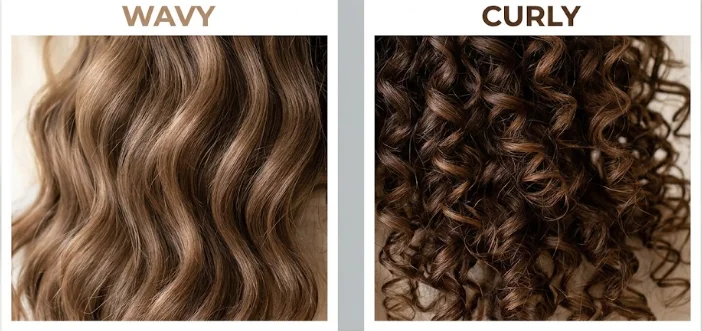
This might be the most common question about this hair type, and fair enough — the gap between thick waves and loose curls is small enough that plenty of people still couldn’t say for sure which side they’re on.
Try this instead of just staring at it: scrunch a small, dry section in your palm and let go. Falls into a loose, soft bend? Wavy. Springs back into an actual ring or spiral? Curly. Wavy hair usually needs a nudge — product, diffusing, sleeping in a braid — to look properly defined. Curly hair just does its own thing without much convincing.This isn’t a scientific test, and plenty of people sit somewhere in between, so use it as a rough guide.
There’s a timing tell too. Wavy hair tends to relax and lose its shape as the day goes on. Curly hair, even loose curls, usually keeps its spring a lot longer unless you’ve touched or brushed it.
What People Actually Mean by “Soft Wavy Hair”
Usually this is pointing at the finer end of wavy — the kind where you barely notice a wave unless your hair’s damp. It flattens fast, doesn’t hold curl for long, and reacts more dramatically to humidity than thicker waves do. None of that makes it a lesser version of wavy hair, though. It just wants different products. Lighter, wave-enhancing stuff, instead of anything cream-heavy that’ll flatten it within the hour.
Worth mentioning: people with this type often over-brush out of habit, thinking their hair needs more work to look finished. It’s usually the opposite. The less you touch it once product’s in, the better the wave actually holds.
What About Extremely Wavy or Super Wavy Hair?
On the flip side, there’s hair people describe as extremely wavy or super wavy — thicker, more defined waves that are maybe one product decision away from being called curly instead. It holds moisture better, frizzes a bit more since the pattern itself is stronger, and does this odd thing where it looks curlier wet and wavier once it’s fully dry. The upside is it holds its shape far better than finer waves once you’ve found something that actually works with it instead of fighting it.

If you’d rather know than guess how your hair’s moisture is actually doing, the Hair Health Score Calculator gives you a real read in about a minute.
The Annoying Stuff Nobody Really Warns You About
Wavy hair comes with its own list of headaches that don’t get talked about enough. Same routine, different result — depending on the weather, or how you slept the night before. Then there’s the frizz that shows up in that awkward middle zone, not curly enough for curly techniques, not straight enough for straight ones either. Roots go flat while the ends stay wavy, so you’re basically managing two textures on one head. And there’s the eternal product tightrope — too heavy and the wave collapses, too light and nothing holds it together at all.
Humidity deserves its own mention too. Wavy hair, especially 2B and 2C, absorbs moisture from the air unevenly, which is exactly why a style that looked great indoors can fall apart the second you step outside on a muggy day.
Mistakes That Are More Common Than People Realize
A handful of habits keep showing up with wavy hair, and most people doing them have no idea it’s the problem.
Brushing dry hair is probably the biggest one. Feels like it should help with definition, but it actually tears the wave pattern apart and kicks off frizz almost instantly. Another: grabbing whatever straight-hair product is already in the shower, figuring wavy hair doesn’t really need anything specific. It usually does — straight hair products tend to be too light to give any hold, and curly hair products can be too heavy, weighing waves down until they’re basically straight anyway.
Washing more often than your scalp needs is another one. Wavy hair often gets greasy more slowly than straight hair, so daily washing isn’t always necessary, and too many washes with a harsh shampoo can leave waves dry and frizzy. Wash when your scalp feels oily. And skipping heat protectant before hot tools doesn’t seem to matter in the moment, but it catches up later as dullness and weaker waves over time.
A Simple Way to Bring Out Your Natural Waves
Want more defined waves without reaching for a heat tool? Here’s a routine that works for most wavy types.
Start right after washing, while hair’s still soaked through. Apply a leave-in conditioner first, working it from mid-length down to the ends. Then a lightweight mousse or curl cream, scrunched upward into the hair instead of smoothed down, since smoothing flattens the wave before it’s even had a chance to form.
Once the product’s in, leave it alone. This is the part most people skip, but touching your hair over and over while it’s drying is one of the fastest ways to undo the shape you just built.
If you’re air-drying, let it get most of the way there before touching it again. Diffusing works too — just keep the heat low and cup sections into the diffuser bowl instead of moving it around constantly.
Once it’s fully dry, if you want a little more separation, scrunch gently again with slightly damp hands instead of running a brush through it.

If you’re stuck guessing which products to actually try, the Hair Product Finder narrows it down based on your real texture instead of trial and error.
Why Your Routine Shouldn’t Stay the Same All Year
Here’s something that doesn’t come up enough: season and climate mess with wavy hair more than they do with most other textures.
In humid weather, wavy hair frizzes and loses its shape faster, so lighter, anti-humidity products and less handling matter more. In dry or cold months, it flips — hair gets flat, brittle, and static-prone, which usually calls for a slightly richer conditioner and, if your scalp allows, washing a little less often.
If you’re somewhere with real seasons, it’s genuinely worth switching up your products every few months instead of sticking to one routine all year and wondering why it stopped working halfway through.
Basic Care, Stripped Down to the Essentials
Go for a gentle, lightweight shampoo. Heavy formulas can weigh waves down, and harsh ones can leave hair dry. Put styling product on damp hair, not dry, since that’s when it actually absorbs and does something.
Scrunch when drying, don’t rub. Rubbing with a regular towel can roughen the surface and cause frizz, while a microfiber towel or an old cotton tee, scrunched gently, helps keep the pattern intact. Skip brushing once it’s dry too, since that just breaks everything apart. Fingers or a wide-tooth comb while conditioner’s still in works a lot better for detangling anyway.
If you’re blow-drying, use a diffuser and keep the heat low. Rough drying with high heat is probably the fastest way to undo whatever wave you had going.
Frequently Asked Questions
How can I tell if my hair is wavy or curly?
Scrunch a dry section in your palm. A loose bend means wavy, a springy ring or spiral means curly. Wavy hair usually needs some help to look defined; curly hair does it on its own.
What is soft wavy hair?
It’s the finer end of wavy texture — subtle waves that show up mostly when hair is damp and tend to flatten out during the day without a lightweight product.
What does extremely wavy or super wavy hair mean?
Thicker, more defined waves that sometimes edge into curly territory. More frizz-prone, but holds definition well once you’re using the right products.
Can wavy hair become curly over time?
Texture can shift a little with hormonal changes, pregnancy, age or medication, and damage can make waves look less defined, but a full jump from wavy to curly is rare. Usually what changes is how defined your existing pattern looks based on your routine.
Why does my wavy hair look different every day?
It reacts strongly to humidity, leftover product, and how it dried or was slept on. A more consistent routine cuts down on that unpredictability over time.
Should I brush my wavy hair?
Many people with wavy hair do well washing two to three times a week, but go by your scalp: wash sooner if it feels oily or itchy. Washing more often than you need with a harsh shampoo can dry out the waves.
How often should I wash wavy hair?
Most people with wavy hair do well washing two to three times a week. Washing daily strips natural oils that actually help hold the wave pattern together.
Do I need different products for wavy hair compared to straight or curly hair?
Generally, yes. Straight hair products are often too light to give any hold, while curly hair products can be too heavy and weigh waves down. Wavy hair usually needs something in between.
Final Thoughts
Wavy hair was never going to fit neatly into one category, and honestly, that’s what makes it kind of fun to figure out once you stop fighting it. Know where your texture actually falls, stop borrowing routines meant for straight or curly hair, and it stops feeling like a daily guessing game.
Curious how well your hair holds onto moisture? That matters a lot here, so the Hair Porosity Test is worth doing next. And if you want to see exactly where wavy ends and curly begins, our Curly Hair Guide gets into that in more detail.
Sources
This article is for general education and isn’t medical advice. It draws on the following sources:

