Is Your Hair Fine, Medium or Thick? How to Tell at Home
Table of Contents
A stylist tells you “you have fine hair,” and you nod like that explains everything. Then you go home, try the products everyone says are great for fine hair, and they still don’t work. Or you’ve been told your hair is thick, but it goes flat by lunchtime.
Part of the problem is that people use “fine”, “thin” and “thick” for two different things. One is how wide each strand is. The other is how many strands you have. This guide sorts that out and gives you a simple check you can do in a minute. If you’d rather be walked through it, the Hair Texture Test does exactly that.
Hair Thickness vs Hair Density
Thickness, sometimes called texture, is the width of a single strand. Density is how many strands you have per patch of scalp. They don’t depend on each other.
So you can have fine strands and lots of them, which looks full and bouncy even though each hair is delicate. Or you can have thick strands and fewer of them, and your hair might look less full than you’d expect. Most advice online only talks about one of the two, which is why it often doesn’t fit.

The Strand Test (Step by Step)
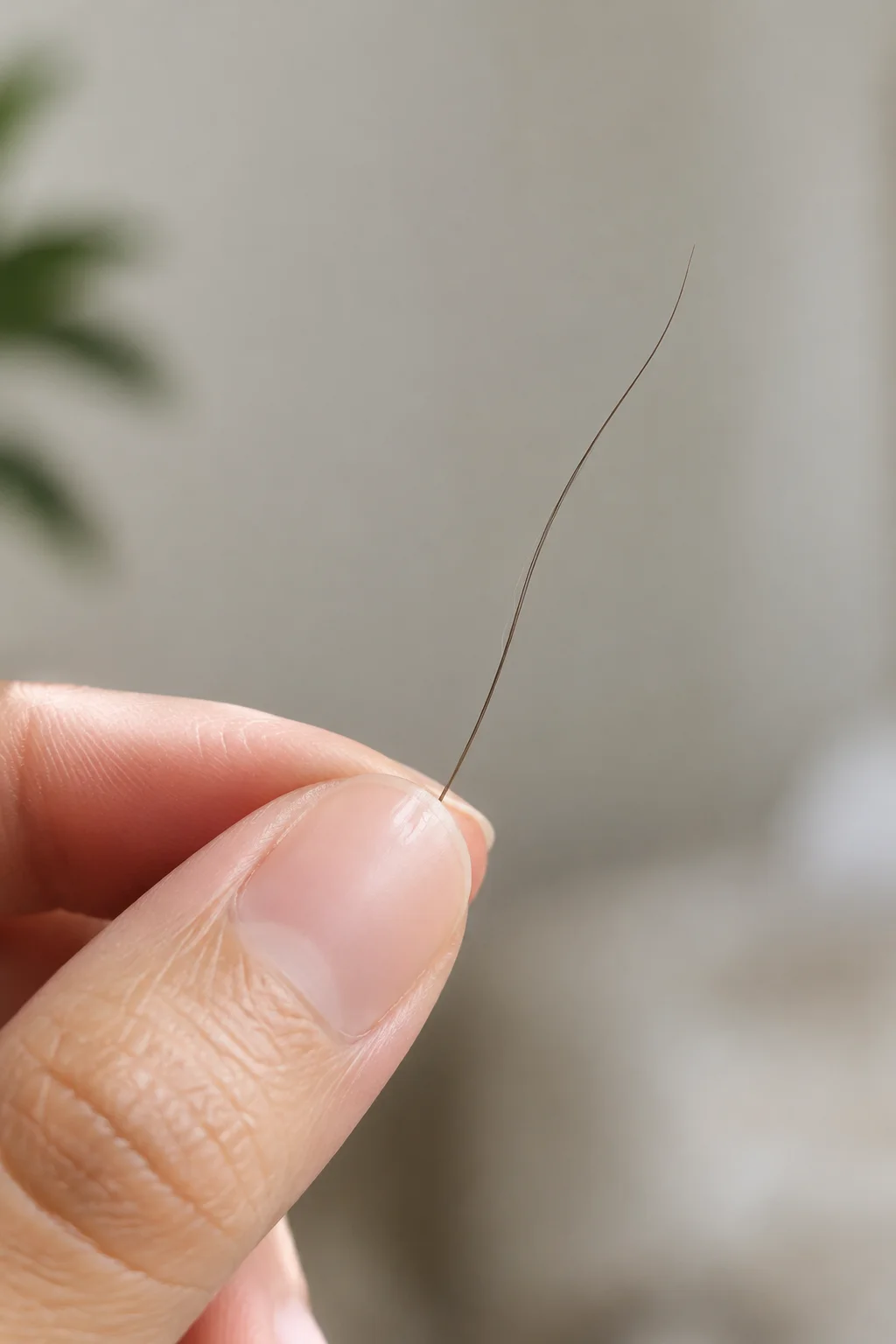
You need one strand of clean hair. Wash your hair without any styling product first, because buildup can make a strand feel thicker than it is.
- Pull one hair that has shed naturally from your brush or comb. Don’t pull one from your head.
- Roll it between your thumb and finger.
- Notice what you feel. If you can barely feel it, your hair is probably fine. If you can feel it clearly but it isn’t rough, it’s probably medium. If it feels wiry or coarse, it’s probably thick.
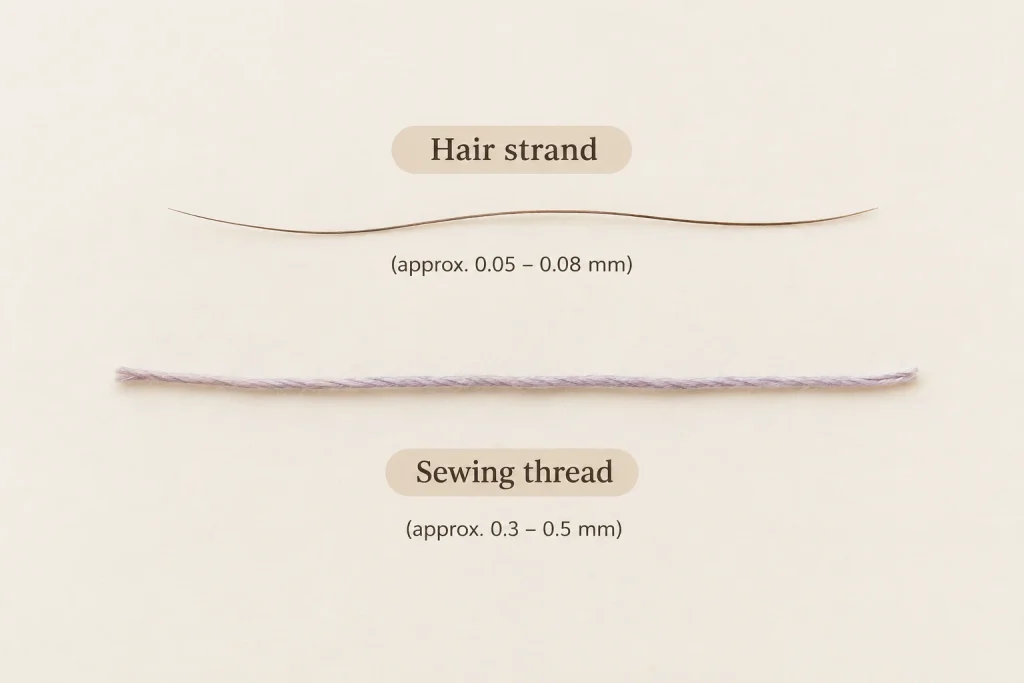
If you want a second check, hold the strand next to a piece of regular sewing thread. A strand that looks thinner than the thread is likely fine. About the same is medium, and noticeably thicker is thick. Thread varies a little, so treat this as a rough comparison, not a measurement.
Test a few strands from different parts of your head. The hair at your temples and nape is often finer than the hair on the crown, and that’s completely normal.
A Quick Density Check (Ponytail Method)
To get a feel for density, gather all your hair into a ponytail at the nape of your neck and measure around it with a tape measure or a piece of string.
A commonly shared rule of thumb says less than about 2 inches suggests lower density, around 2 to 3 inches is medium, and more than 3 inches is higher. These numbers are informal. They shift with how tightly you hold the hair, how long it is and how thick each strand is, so use them as a rough guide only.
This isn’t a way to tell whether you’re losing hair. If your hair has become noticeably thinner, or you’re seeing patches or a lot more shedding than usual, see a doctor or dermatologist. The NHS notes that hair loss is common and often not serious, but it can sometimes be linked to a medical condition, and our Hair Loss & Thinning Guide explains what’s normal.

What Fine Hair Needs
Fine strands get weighed down easily, so lighter is usually better. Look for lightweight shampoos and conditioners, and a mousse or light spray if you want volume. Rich oils and butters tend to flatten fine hair within hours, so use them sparingly or keep them to the very ends.
Dermatologists at the American Academy of Dermatology suggest putting conditioner on the ends of fine or straight hair, not the roots. Fine hair can also be more delicate with heat, so use a heat protectant and keep the temperature lower than you think you need. If your hair goes flat quickly, our Straight Hair Guide has more on that.
What Medium Hair Needs
Medium is often the easiest to please. It handles a wider range of products without going flat or feeling heavy, so you have more room to experiment.
What matters more at this thickness is the rest of your hair’s profile: your curl pattern and your porosity. A medium strand that’s wavy and low porosity needs a very different routine from a medium strand that’s straight and high porosity. Most of your choices should follow those two things, not the thickness itself.
What Thick Hair Needs
Thick strands usually want richer conditioning and a bit more patience. Conditioner needs time to work through, and you may need more of it than you expect. Hair takes a long time to dry, so air drying can take hours, and sectioning your hair before blow-drying helps it dry evenly. Keep the heat low to medium and use a heat protectant.
Thick hair can also frizz when it’s dry or roughly handled, so a leave-in conditioner and gentle detangling help. If frizz is your main complaint, the Frizz Control Guide covers it properly.
Thickness, Curl Pattern and Porosity: How They Fit Together
It helps to think of your hair as three separate traits stacked together. Thickness is the width of the strand. Curl pattern is its shape, whether straight, wavy, curly or coily. Porosity is how well it takes in and holds moisture.
Any combination is possible, which is why two people with “fine hair” can need totally different products. If you’ve been guessing, start with your curl pattern in the Hair Type Quiz, then check your porosity with the Hair Porosity Test. Our Hair Porosity Guide explains what the result means. Once you know all three, the Hair Product Finder and the Hair Routine Builder can turn them into actual product and routine suggestions.
Take the Hair Texture Test
The strand test above works as a rough hint, but it relies on how things feel to you, and that’s hard to judge on your own. The Hair Texture Test is the guided version. It asks a few simple questions about your strands and tells you what your result means, so you’re not second-guessing yourself.
Final Thoughts
Fine, medium and thick describe one thing: how wide each strand is. Once you separate that from density, it gets much easier to see why advice written for “fine hair” or “thick hair” doesn’t always fit you. A quick strand test is a good starting point, and you can fine-tune from there by paying attention to how your hair actually behaves.
Thickness is only one piece. Your curl pattern and porosity shape your routine just as much, so it’s worth checking all three. For a guided result, take the Hair Texture Test, then let the Hair Routine Builder turn it into a simple plan.
Frequently Asked Questions
How do I know if my hair is fine or thick?
Roll a clean strand between your thumb and finger. If you can hardly feel it, your hair is probably fine. If it feels clearly present but not rough, it’s probably medium, and if it feels wiry or coarse, it’s probably thick. Comparing the strand with a piece of sewing thread gives you a second check, or try our Hair Texture Test.
Is fine hair the same as thin hair?
Not quite. Fine describes how wide each strand is, while “thin” usually means you don’t have many strands, or that your hair has become less full. You can have fine hair that looks full if there’s a lot of it. If your hair seems to be thinning, that’s worth checking with a doctor.
Can hair thickness change over time?
A little. Strand width can shift with age, hormonal changes and some health conditions or medications. If your hair changes noticeably in a short time, mention it to a doctor instead of assuming it’s just aging.
Does thick hair mean high density?
No. Thickness is about each strand, and density is about how many strands you have. Thick strands with low density can look less full than fine strands with high density.
What products work best for fine hair?
Lightweight ones. A gentle shampoo, a light conditioner kept to the ends, and a mousse or spray if you want volume usually work better than rich creams, butters and heavy oils, which tend to make fine hair look flat.
Sources
This article is for general education and isn’t medical advice. It draws on the following sources: